Imagine this: after a long stretch of back-to-back meetings, instead of just grabbing another coffee, a team walks into a quiet chamber. They settle into reclining seats. Slowly, they breathe in pure oxygen in a pressurized cabin. Thirty minutes later, they emerge with clearer minds, calmer nerves, and renewed energy. That’s not sci-fi — that’s the inspiring edge some companies are building into their wellness programs with hyperbaric oxygen therapy (HBOT).

Corporate wellness has evolved. It’s no longer about fitness challenges or free fruit in the breakroom. The trend now is about restorative moments that hit deeper — and oxygen therapy in the workplace is among the rising stars in this space.
Why Oxygen Therapy Is Catching On for Employee Well-Being
Companies are always hunting for win-wins: ways to make employees healthier, happier, and more productive. Traditional wellness perks help—but they often treat symptoms. Oxygen therapy goes to the root.
- It accelerates recovery from fatigue. When you breathe oxygen under pressure, your body can deliver more oxygen to tissues — helping reduce soreness, restore energy, and shorten recovery from intense mental or physical effort.
- It reduces inflammation. Chronic low-grade inflammation drains energy, clouds thinking, and burns out the system. Exposure to highly oxygenated air (in an HBOT environment) helps modulate that inflammatory response.
- It sharpens cognition. Studies show that performing cognitive tasks (or multitasking) while in a hyperbaric oxygen environment (2 ATA, for example) significantly improves performance over normal air. When people have better focus, fewer mental errors, and clearer thinking, the whole organization wins.
So when companies offer oxygen cabins, they aren’t just offering a novelty — they’re investing in recovery, resilience, and performance.

Real or Plausible Use Cases: “High-Pressure Meetings”
Consider this hypothetical but plausible scenario:
A fintech startup in New York institutes “high-pressure meetings” once a week. After long brainstorming sessions, teams retreat into the company’s HBOT cabin for 15 minutes. The idea isn’t just recovery; it’s strategic. The oxygen session gives mental reset, helps tension dissolve, improves collaboration in the follow-up, and reduces burnout.
Or imagine a large finance firm in London, where after quarterly reporting periods (when stress and work hours spike), they bring in the oxygen cabin, set up next to their wellness center. An optional slot for employees to decompress. The result: fewer sick days, better mood, more resilient performance in the next quarter.
While I didn’t find many public examples of companies openly advertising these “high-pressure meeting + oxygen cabin” offerings, there is evidence that wellness tech (like mobile oxygen bars, breathwork, etc.) is used in retreats and events for exactly these reasons. Summit Oxygen, for example, offers corporate retreat oxygen bars to sharpen focus and reduce fatigue.
What the Research Suggests
Good corporate wellness programs have measurable outcomes: lower absenteeism, better morale, improved work ability. Adding HBOT appears to amplify these effects.
A relevant trial found that participants in a hyperbaric oxygen environment showed significantly better results on cognitive tasks and multitasking compared to those in regular air. This suggests that after or during stressful periods, HBOT can boost mental clarity and resilience.
Even though large-scale randomized trials focused explicitly on workplace HBOT are still rare, the logic is strong: if oxygen improves cognitive performance, reduces physical inflammation, and supports recovery, then workplaces that integrate it will benefit.
The Morale & Culture Boost
Beyond physical benefits, offering oxygen therapy sends a message. It tells employees: we care about you at the cellular level. That sort of message can shift workplace culture. It builds trust, reduces burnout, and can improve retention.
When wellness programs are viewed as perks that genuinely make life better—not just checkbox benefits—they deepen engagement. Employees are proud to work somewhere that invests in recovery, not just performance.

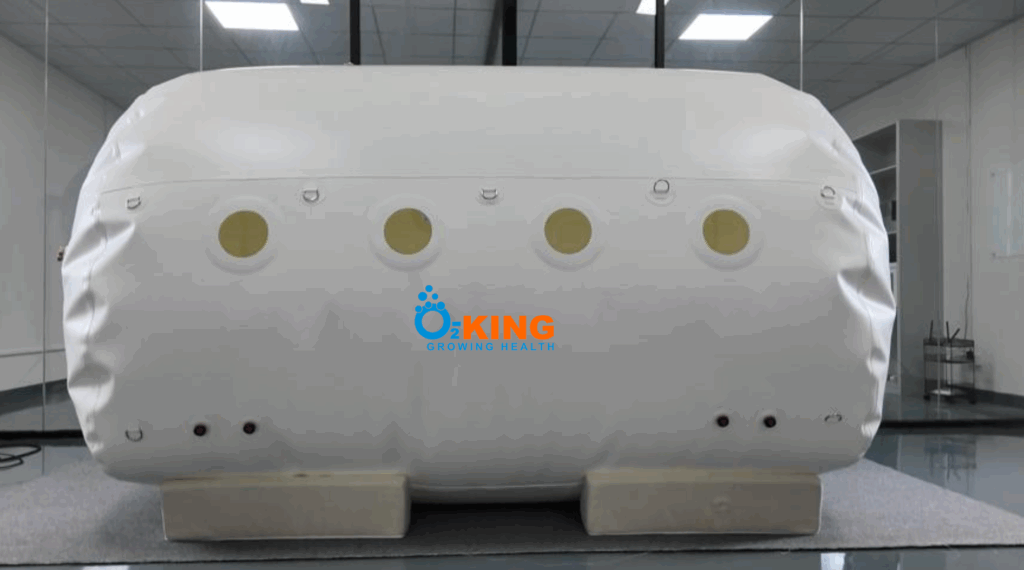
O2-KING’s 4- to 12-Seater Cabins: Scaling Recovery
This is where O2-KING steps in with real, versatile solutions. Whether for small teams or large departments, having cabins that fit 4, 6, 8, or up to 12 people lets companies integrate HBOT in different ways—group sessions, team breaks, or even wellness rooms.
Here’s why O2-KING’s multi-seater hyperbaric oxygen cabins are particularly compelling in corporate settings:
- Group recovery moments: Instead of one-person sessions, a 6- or 12-seater cabin lets multiple colleagues share the experience. It’s restorative and subtle team-building.
- Efficient use of space and investment: A multi-seater cabin can serve more people, making the ROI more favorable. Utilization rates can be higher.
- Variety of seating options: Reclining seats, adjustable chairs—comfort matters when employees are finishing a long workday.
- Medical-grade safety: Pressure regulation, emergency protocols, filtration systems, and quality control. O2-KING’s cabins are designed not just for wellness perks, but for safe, repeatable, therapeutic use.
- Support services: Installation, staff training, maintenance. Having the cabin is one thing; making sure it is used properly, safely, and consistently is another. O2-KING performs well here.
Because of all this, O2-KING often becomes the first choice for companies that want serious wellness infrastructure—not just superficial amenities.
How to Introduce HBOT into a Wellness Program
If you’re considering bringing oxygen therapy into your workplace, here are steps that tend to work well:
- Pilot with a small team or cohort: Use the cabin a few times per week, measure mood, recovery, performance.
- Schedule recovery slots: After big deadlines, performance cycles, or between major projects.
- Combine with other wellness offerings: Massage, meditation, breathwork—oxygen helps these work better.
- Communicate carefully: Because it’s not yet mainstream everywhere, clear explanation of what HBOT is, what it isn’t, and what employees should expect is important.
- Measure outcomes: Productivity metrics, absenteeism, health claims, employee feedback. Then scale if the pilot shows positive results.

Final Thoughts: A Smarter Wellness Edge
Today’s workplace is noisy, fast, demanding. Performance pressure is real. That’s why companies that invest in bona fide recovery tools—not just fancy perks—gain more than they spend. Oxygen therapy is one such tool.
By offering hyperbaric oxygen therapy in the workplace, organizations aren’t chasing trends; they’re supporting human systems. They help their people heal, recharge, and bring their best selves to work. That leads to better morale, better productivity, lower burnout, and a competitive edge in attracting talent.
If your organization is serious about wellness, adding oxygen therapy—especially via cabins that fit multiple people—isn’t just nice. It’s forward thinking. And when you choose O2-KING’s 4- to 12-seater hyperbaric oxygen cabins, you’re choosing comfort, scalability, and safety along with that next-level recovery.
