Elite sport is a story told in margins: the split-second decision, the millimeter advantage, the night’s sleep that separates a podium finish from “almost.” Increasingly, top athletes are adding a new chapter to that story — daily or near-daily sessions in hyperbaric oxygen therapy (HBOT) chambers. For many, HBOT has moved beyond experimental recovery into trusted routine: a tool to speed healing, sharpen energy, and keep training loads high without breaking down the body.
Below I explain, in plain language, how HBOT helps athletes, what physiological mechanisms matter, how O2-KING’s chambers serve teams and individuals, and practical buying options — buy vs. rent vs. lease — so clubs and athletes can choose what fits their goals and budgets.
What HBOT actually does for an athlete (and why it matters)
At its core, HBOT increases the amount of oxygen dissolved in the blood and tissues by exposing the body to pure oxygen at greater-than-normal atmospheric pressure. That extra oxygen is not just a short-lived boost — it triggers a cascade of beneficial biological responses that matter directly for athletic performance and recovery:
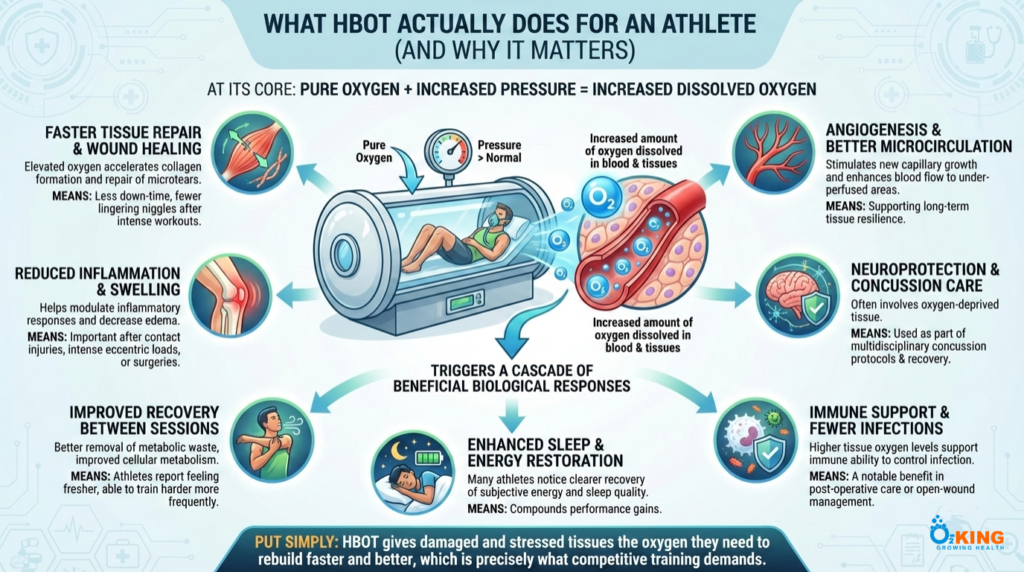
- Faster tissue repair and wound healing. Elevated oxygen availability accelerates collagen formation and the repair of microtears in muscles and connective tissue. That means less down-time after intense workouts and fewer lingering niggles.
- Reduced inflammation and swelling. HBOT helps modulate inflammatory responses and decrease edema — important after contact injuries, intense eccentric loads, or surgeries.
- Improved recovery between sessions. With better removal of metabolic waste and improved cellular metabolism, athletes report feeling fresher and able to train harder more frequently.
- Angiogenesis and better microcirculation. HBOT stimulates new capillary growth and enhances blood flow to under-perfused areas, supporting long-term tissue resilience.
- Neuroprotection and concussion care. Because neurological injury often involves oxygen-deprived tissue, HBOT is being used as part of multidisciplinary concussion protocols and post-concussion recovery strategies.
- Immune support and fewer infections. Higher tissue oxygen levels support the immune system’s ability to control infection — a notable benefit in post-operative care or open-wound management.
- Enhanced sleep and energy restoration. Many athletes notice clearer recovery of subjective energy and sleep quality after a course of sessions, which compounds performance gains.
Put simply: HBOT gives damaged and stressed tissues the oxygen they need to rebuild faster and better, which is precisely what competitive training demands.
How daily (or frequent) HBOT sessions fit into an athlete’s routine
Athletes don’t use HBOT as a one-off miracle. The most practical applications look like this:
- Daily short sessions during high-load periods (training camp, pre-season, tournament block) to maintain recovery capacity.
- Post-game or post-match sessions (within 24 hours) to blunt acute inflammation and accelerate metabolic recovery.
- Post-surgery rehabilitation — a concentrated series of sessions to reduce complications and speed return to training.
- Deload weeks and travel recovery — to combat jet lag, reduce accumulated fatigue, and restore sleep patterns.
A few minutes under pressure every day can mean the difference between pushing through a training block and an enforced rest because of an avoidable soft-tissue injury.
Why top teams and pro athletes choose HBOT: real-world advantages
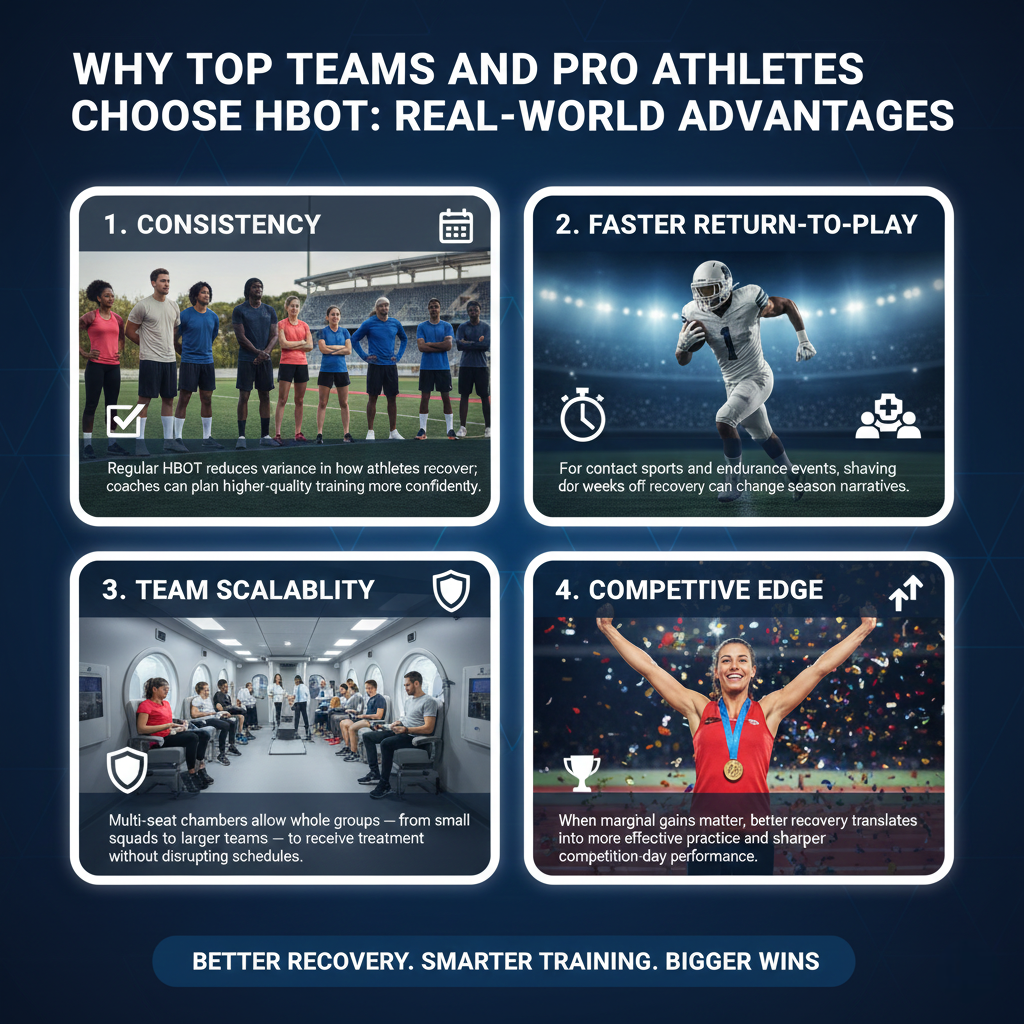
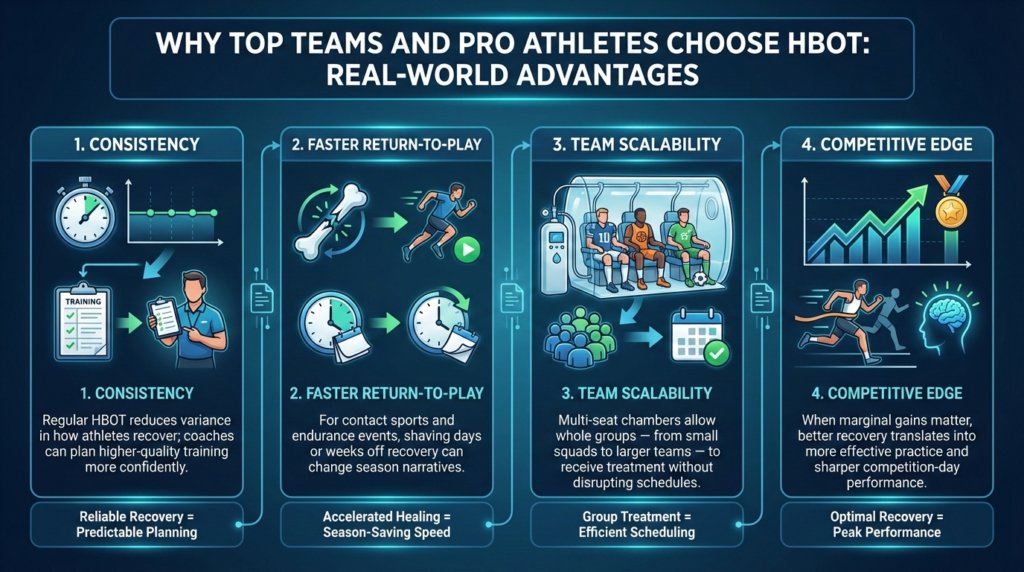
- Consistency: Regular HBOT reduces variance in how athletes recover; coaches can plan higher-quality training more confidently.
- Faster return-to-play: For contact sports and endurance events, shaving days or weeks off recovery can change season narratives.
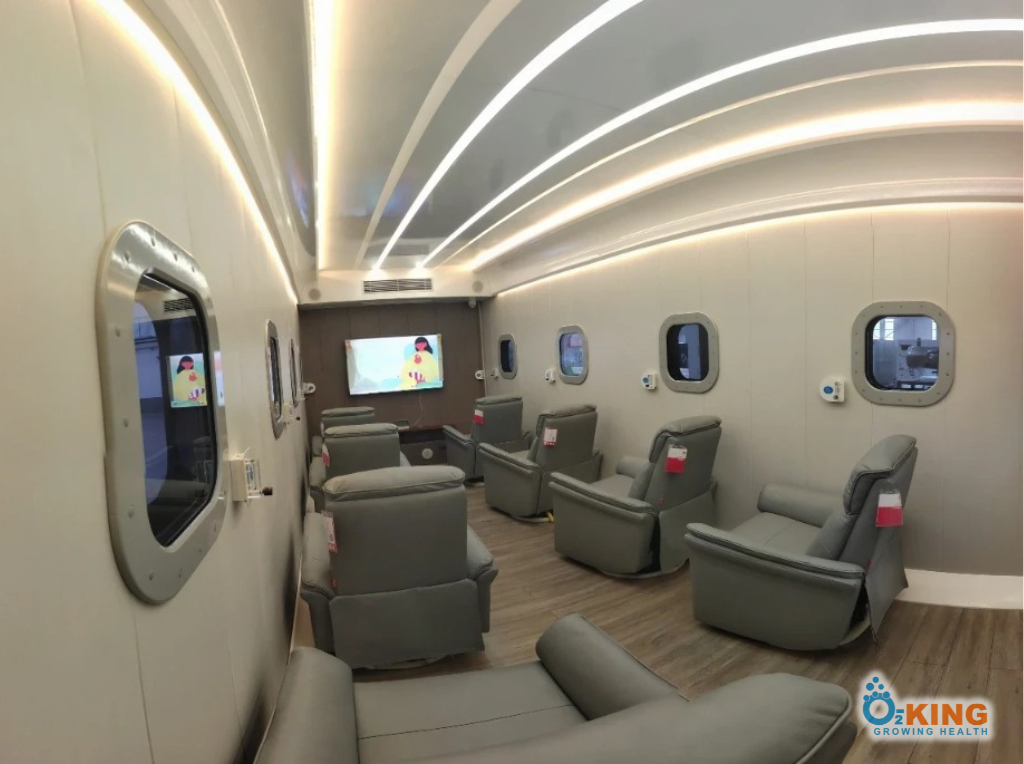
- Team scalability: Multi-seat chambers allow whole groups — from small squads to larger teams — to receive treatment without disrupting schedules.
- Competitive edge: When marginal gains matter, better recovery translates into more effective practice and sharper competition-day performance.
How O2-KING oxygen therapy chambers help athletes
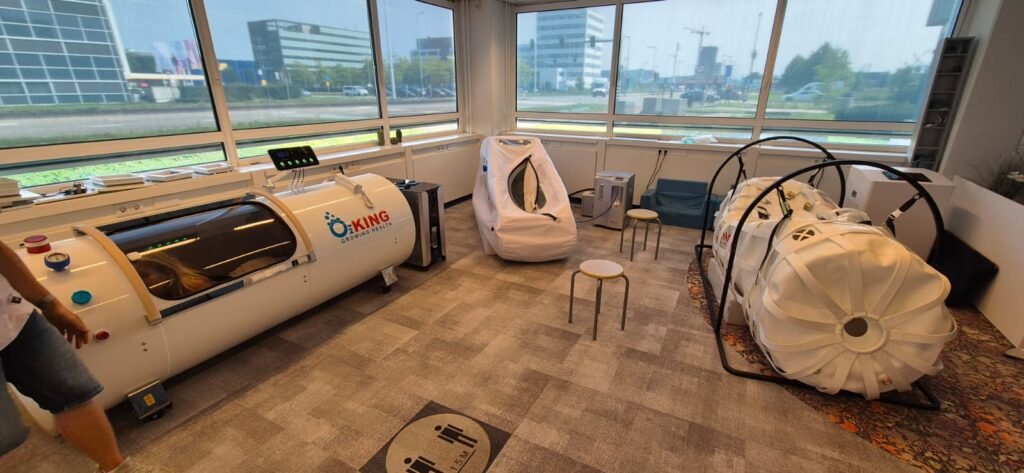
O2-KING offers a portfolio designed specifically for sports and clinical clients — from portable single-user units to 12-seat chambers for teams and clinics. Here’s why that range matters for athletes and organizations:
- Variety to match needs: A solo elite athlete or a small practice may favor a compact single-seat chamber for daily sessions. Professional clubs, national teams, and performance centers typically invest in multi-seat chambers so recovery can happen for multiple athletes concurrently.
- Portability and installation flexibility: O2-KING’s portable and soft/hybrid chambers (depending on model) reduce the need for permanent structural modifications, which is ideal for clubs that may relocate or for medical teams working at events.
- Designed for sports workflows: Controls, session presets, and simple operational protocols let physiotherapists and sports med staff integrate HBOT into daily training schedules with minimal friction.
- Safety and training: O2-KING provides operator training, safety procedures, and maintenance support — crucial for keeping treatments consistent and compliant.
- Support for staged escalation: Teams can start with a smaller chamber for individual players, then scale up to multi-seat solutions as demand grows — a practical pathway for clubs with limited capital.
In short: O2-KING’s product range and service model match how modern athletic programs operate — flexible, scalable, and integrated into the recovery workflow.
Certified, Trusted, and Aligned with Global Standards
Beyond technology and design, credibility matters — especially in medical and performance recovery environments. O2-KING is a proud member of both IBUM (International Board of Undersea Medicine) and IHA (International Hyperbaric Association), and our systems and protocols are IBUM & IHA certified. These certifications reflect adherence to internationally recognized safety, operational, and ethical standards in hyperbaric oxygen therapy. For athletes, teams, and clinics, this means confidence: treatments delivered using equipment and practices aligned with global best-in-class guidelines, not shortcuts or unverified claims.
Types of chambers (what to consider)
When evaluating chambers, keep these distinctions in mind:
- Single-seat chambers: Best for individual athletes, physiotherapists, and personal trainers. Lower upfront cost, easy to place.
- Multi-seat chambers (2–12 seats): Efficient for teams and clinics — while one athlete trains, others can be treated in sequence or simultaneously.
- Portable soft chambers vs. rigid/hard chambers: Soft chambers offer portability and lower installation needs; hard chambers are permanent, often allowing for higher pressures and longer-term durability.
- Pressure and session protocols: Different models have different maximum pressures and session profiles — choose based on clinical goals (e.g., higher pressures are often used in serious wound care, while moderate pressures are common for performance recovery).
Buy vs. Rent vs. Lease: Which option fits your program?
Choosing ownership model is as important as choosing a chamber. Here’s a practical breakdown:
Buy — Pros
- Lowest long-term cost if usage is high.
- Full control over scheduling and protocols.
- Easier to customize and integrate into club facilities.
- Builds an asset for the organization.
Buy — Cons
- High upfront capital expenditure.
- Responsibility for maintenance, certification, and operator training.
- Depreciation and regulatory compliance obligations.
Rent — Pros
- Ideal for short-term needs — events, recovery camps, or trials.
- Low commitment; provider handles maintenance and installation.
- Quick deployment without capital outlay.
Rent — Cons
- Higher cost per session over time.
- Limited customization and availability windows.
- Not a long-term solution if usage is frequent.
Lease — Pros
- Lower monthly payments than buying outright.
- Predictable budgeting and easier access to higher-end multi-seat chambers.
- Possible inclusion of maintenance and updates in the lease agreement.
Lease — Cons
- Longer-term contractual commitment.
- Total cost may exceed outright purchase over many years.
- Equipment still returns to the lessor at term end unless there’s a buyout option.
Which is right?
- If your facility expects heavy daily use (professional teams, pro training centers), buying often makes the most financial and operational sense.
- If you’re piloting HBOT or need seasonal access (tournament circuits, temporary camps), renting provides flexibility.
- For organizations that want predictable payments without a large capital hit, or that need access to high-end equipment immediately, leasing strikes a middle ground.
O2-KING supports all three models — buy, rent, and lease — and can advise on an implementation roadmap that factors projected usage, staffing, and integration costs.
Tips for integrating HBOT into an athlete program
- Make it protocol-driven. Build session timing into training plans (e.g., 60–90 minutes post-match or 30–40 minutes daily during heavy training blocks), and document outcomes.
- Coordinate with allied medical staff. HBOT is most effective when paired with physiotherapy, strength & conditioning, and nutrition protocols.
- Track metrics. Subjective wellness, pain scores, training load tolerance, and objective markers (where available) help evaluate ROI.
- Start with a pilot. Run a 4–6 week trial with a subgroup to measure benefits before scaling.
- Educate athletes. Explain expectations and normal sensations; clear communication increases compliance and perceived benefit.
Short FAQs
Q: Is HBOT a steroid or banned substance?
No. HBOT is a legal recovery modality and is not listed as a prohibited performance enhancer.
Q: How soon do athletes see benefits?
Some athletes report measurably reduced soreness and better sleep within days; structural tissue healing and angiogenesis are gradual and often require a series of sessions.
Q: Any safety concerns?
When operated by trained staff and within manufacturer guidelines, HBOT is safe. Contraindications exist (certain lung conditions, untreated pneumothorax, etc.), so screening by a medical professional is required.
Final thought: marginal gains that add up
In elite sport, the difference between victory and near-miss is often made up of “small” advantages stacked over time. Hyperbaric oxygen therapy is not a silver bullet, but when used correctly — daily or frequently during high-load periods — it helps athletes train harder, recover faster, and return to peak form sooner. Whether you’re an individual athlete, a club physiotherapist, or the director of a performance center, O2-KING’s range of chambers and flexible acquisition options make it practical to bring that advantage in-house or deploy it to your team when it matters most.