
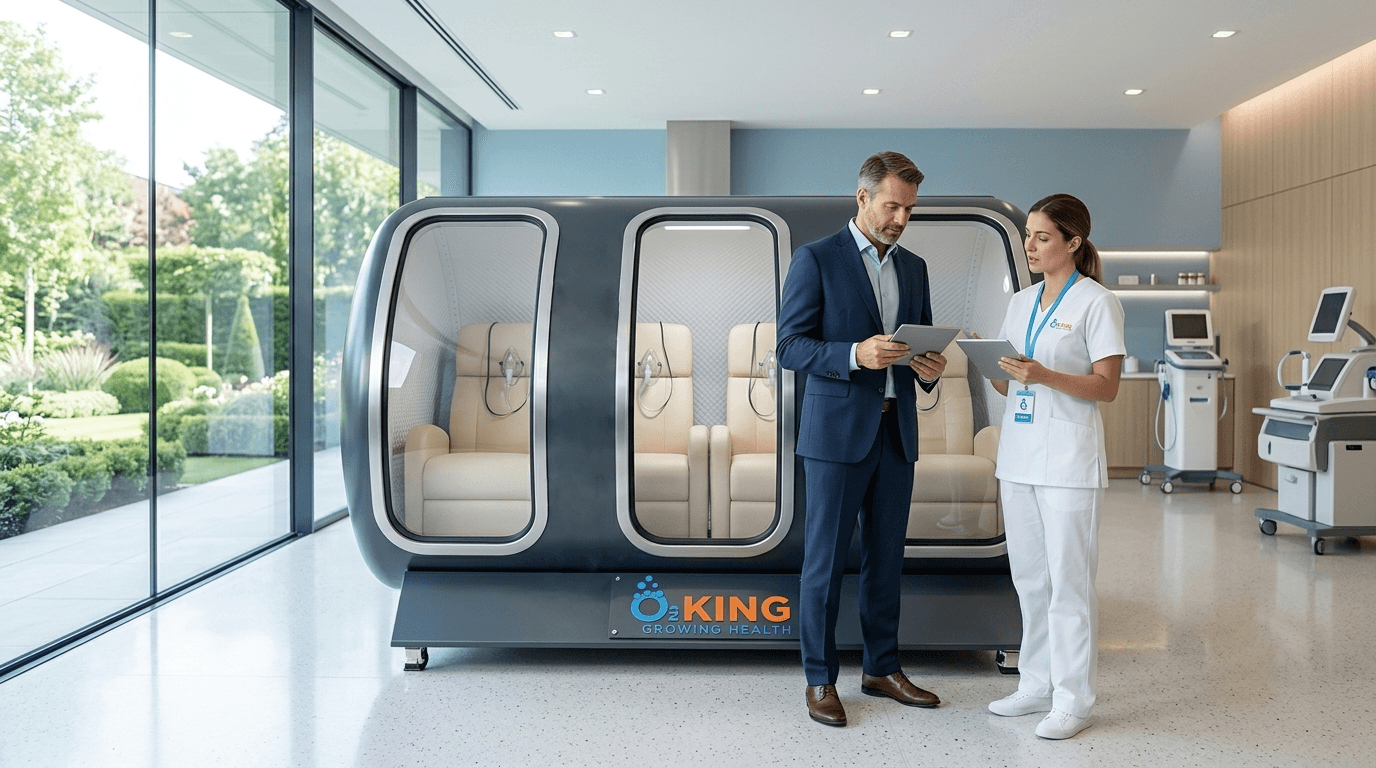
Buying an HBOT Oxygen Therapy Chamber is not like buying an ordinary piece of fitness or wellness equipment. It is a significant investment, and the decision can influence everything from daily operations and customer experience to maintenance, staff training, safety procedures, and long-term business costs.
For a first-time buyer, comparing chambers can quickly become confusing. One manufacturer talks about pressure. Another emphasizes oxygen concentration. Someone else focuses on materials, design, comfort, certifications, or price. Two chambers may even look remarkably similar while being designed for very different applications.
That is why smart buyers do not begin with the question, “How much does it cost?” They begin with better questions.
What is this chamber actually designed for? What specifications matter? How is oxygen delivered? What safety systems are included? Who manufactured it? What happens if something goes wrong? What support will I receive after installation? And perhaps most importantly, will this chamber make sense for the way I intend to use it?
A thoughtful buying process can prevent expensive mistakes later. Here are the questions worth asking before choosing an HBOT Oxygen Therapy Chamber.
Why Choosing the Right HBOT Oxygen Therapy Chamber Matters
Hyperbaric oxygen therapy involves breathing oxygen in a pressurized environment. That means the chamber is not simply a room with an oxygen supply attached to it. It is a specialized system involving pressure, oxygen delivery, controls, monitoring, materials, mechanical components, and safety procedures.
For a business, there is another layer to consider: the chamber must fit the business.
A wellness center may have different requirements from a sports recovery facility. A medical environment may have different regulatory and operational requirements from a private wellness facility. A commercial operator may prioritize throughput and serviceability, while an individual buyer may be more concerned with footprint, convenience, and installation.
There is no universal answer to the question, “Which HBOT chamber is best?”
The better question is: “Which chamber is best suited to my intended application?”
That is where smart purchasing begins.
1. What Type of HBOT Chamber Do I Actually Need?
This should be the first question on your list.
HBOT chambers come in different configurations and are designed for different environments and applications. Some are intended for professional facilities, while others may be designed for specific home or wellness applications.
You may encounter different chamber constructions, sizes, pressure capabilities, oxygen-delivery arrangements, and operating systems.
Before comparing brands, establish what you actually need. Is the chamber intended for a clinic, wellness center, gym, recovery facility, or private use? How many sessions do you expect to conduct each day? How much space is available? Who will operate the equipment? What level of training will operators require? What pressure and oxygen specifications are appropriate for the intended application? Are there specific regulatory requirements in your country or region?
Buying a chamber simply because it is popular is not necessarily a smart strategy. The right equipment is the equipment that matches the job.
2. What Operating Pressure Does the Chamber Provide?
Pressure is one of the most important technical specifications buyers encounter when researching an HBOT Oxygen Therapy Chamber.
Chamber pressure is commonly discussed in terms of ATA, or atmospheres absolute. However, a higher number should not automatically be interpreted as meaning that a chamber is better.
This is an important distinction.
Different applications may require different operating parameters. The appropriate pressure depends on the chamber design, intended use, applicable protocols, and professional guidance.
A buyer should therefore ask the manufacturer:
“What is the chamber’s operating pressure range, and what is it designed for?”
Also ask whether the stated pressure refers to the chamber’s normal operating range or its maximum capability.
Understanding the specification is much more useful than simply comparing the biggest number on a brochure.
3. How Is Oxygen Delivered Inside the Chamber?
Oxygen delivery is another critical area that deserves careful attention.
A buyer should understand whether oxygen is supplied through an oxygen concentrator, breathing system, mask, hood, or another configuration, depending on the chamber design.
Ask the manufacturer: “What oxygen delivery system does this chamber use?”
Then ask: “What oxygen concentration can the system provide under its intended operating conditions?”
This matters because the oxygen concentration available to the user can depend on the entire system, not merely the presence of an oxygen concentrator.
A reputable manufacturer should be able to explain the system clearly rather than hiding important information behind vague marketing language.
4. What Safety Features Are Built Into the Chamber?
This is one question where price should take a back seat.
Whenever you are dealing with pressurized environments and oxygen, safety needs to be considered from the beginning.
Ask the manufacturer to explain the chamber’s safety systems in straightforward language.
Depending on the chamber design, buyers may want to understand features related to pressure monitoring, pressure control, emergency procedures, communication between the occupant and operator, emergency depressurization or release systems, oxygen monitoring, ventilation, electrical systems, fire-safety considerations, operator controls, and warning or alarm systems.
Do not be satisfied with the phrase “It is completely safe.”
Ask how.
Good manufacturers should be able to explain the engineering and operating procedures behind their safety claims.
5. What Materials Is the Chamber Made From?
The materials and construction of an HBOT Oxygen Therapy Chamber deserve more attention than they often receive.
A chamber may look impressive in photographs, but appearance tells you very little about the engineering underneath.
Ask: What materials are used in the chamber? How are critical components manufactured and tested? What is the expected service life? Which components are replaceable? How easy is it to obtain replacement parts?
If you are purchasing equipment for commercial use, durability becomes particularly important because the chamber may be used repeatedly over many years.
Think beyond the first impression.
A chamber is a long-term asset. The quality of its construction can affect reliability, maintenance, customer experience, and the overall cost of ownership.
6. Does the Chamber Have the Appropriate Certifications and Documentation?
This is another area where buyers should slow down.
Manufacturers may mention various certifications, standards, approvals, registrations, or quality-management systems. But buyers should understand exactly what each document refers to.
Ask for documentation rather than relying exclusively on statements in advertisements.
Questions worth asking include:
- What certifications apply to this specific model?
- Which organization issued them?
- What standards were used?
- Are the documents current?
- Do they apply to the complete chamber or only particular components?
- What documentation will be supplied with the equipment?
- Are there country-specific regulatory requirements I need to meet?
The exact requirements vary depending on the country, chamber type, intended use, and regulatory classification.
If a manufacturer is reluctant to provide appropriate documentation, that should make you pause.
7. Who Actually Manufactured the Chamber?
A brand name alone does not tell the whole story.
Before investing in an HBOT Oxygen Therapy Chamber, research the manufacturer behind it.
How long have they been producing hyperbaric equipment? Where are their chambers manufactured? Do they have technical support? Can they provide product documentation? Do they have an established supply chain for replacement parts? Are they able to provide training and installation assistance?
And perhaps most importantly:
What happens after you have paid the invoice?
A good supplier relationship should not end when the chamber arrives at your facility.
8. What Is Included in the Purchase?
Two chambers can have similar headline prices while offering very different packages.
One quotation may include major components and installation. Another may list the chamber at an attractive price but leave several important items as additional purchases.
Before comparing prices, ask for a complete list of what is included.
This might include the chamber, compressor, oxygen concentrator or oxygen supply equipment, control system, monitoring equipment, accessories, installation, operator training, documentation, warranty, and technical support.
Request a detailed quotation. It makes comparison much easier and prevents unpleasant surprises later.
9. How Much Does an HBOT Oxygen Therapy Chamber Really Cost?
Price matters. But purchase price is not the same as total cost.
A cheaper chamber can become expensive if it requires frequent servicing, has difficult-to-source components, creates operational limitations, or provides poor technical support.
When calculating the real cost, consider:
Purchase price + installation + training + maintenance + consumables + replacement parts + servicing + downtime.
For a commercial facility, downtime can be particularly costly.
Imagine having customers booked for sessions and discovering that a critical component needs replacement, but the supplier cannot provide it quickly.
The initial saving suddenly looks much less attractive.
Smart buyers therefore ask:
“What will this chamber cost me over five or ten years?”
That is a far better question than simply asking for the lowest price.
10. What Warranty Is Provided?
A warranty is more than a line on a sales document.
It tells you something about how the manufacturer stands behind its equipment.
Ask how long the warranty lasts, what components are covered, what is excluded, who pays shipping for warranty parts, who performs repairs, whether on-site service is available, and what happens if the chamber develops a major technical problem.
Read the warranty carefully.
A long warranty can sound impressive, but the details matter more than the headline number.
11. What Happens When the Chamber Needs Maintenance?
Every sophisticated piece of equipment eventually requires maintenance.
That is not necessarily a weakness. It is simply reality.
The question is whether maintenance is straightforward and properly supported.
Ask:
What routine maintenance is required?
How often should the chamber be inspected or serviced?
Which parts are considered consumable or wear components?
Are replacement parts readily available?
Can technicians be trained locally?
How quickly does the manufacturer normally respond to technical issues?
For a busy commercial operation, serviceability can be just as important as the initial specification.
12. How Much Space Does the Chamber Require?
This sounds like a basic question, but it is frequently overlooked.
Measure the actual space available before purchasing.
Consider not only the chamber itself but also access routes, doorways, elevators, ceiling height, electrical connections, ventilation, compressor placement, operator workspace, customer access, and maintenance clearance.
A chamber may fit perfectly on a floor plan and still be difficult to install because it cannot physically get through the building’s entrance.
Measure first. Order second.
13. Is the Chamber Comfortable for Customers?
Technical specifications matter, but customer experience matters too.
If your business depends on repeat sessions, comfort can influence whether customers want to return.
Think about interior space, visibility, communication, noise, temperature, lighting, ease of entry and exit, interior design, seating or positioning, and entertainment options, where appropriate.
A customer may forget the exact pressure specification you advertised.
They will probably remember whether the overall experience was comfortable and professional.
14. Is the Chamber Easy for Staff to Operate?
The best equipment in the world becomes less useful if the people operating it find the controls unnecessarily complicated.
Ask for a demonstration.
Have the operator walk you through preparing the chamber, starting a session, monitoring the system, communicating with the occupant, managing normal operating procedures, responding to alarms, ending the session, and cleaning and routine maintenance.
If possible, let the people who will actually operate the chamber participate in the evaluation.
They may notice practical issues that a business owner overlooks.
15. What Training and Support Will I Receive?
Training should not be treated as an optional afterthought.
Before purchasing an HBOT Oxygen Therapy Chamber, find out what training the manufacturer or supplier provides.
Ask whether training covers equipment operation, safety procedures, routine checks, emergency procedures, cleaning, maintenance, troubleshooting, and customer handling.
Also determine whether training is provided remotely, on-site, or through another format.
A strong supplier relationship should give you confidence not only on day one, but months and years after installation.
16. Can I Buy, Rent, or Lease the Chamber?
Not every business wants to purchase equipment outright.
This is particularly relevant for entrepreneurs who are testing a new HBOT service or businesses that want to preserve capital for other investments.
Depending on availability and commercial terms, options may include buying, renting, or leasing.
Buying
Buying can make sense when you have sufficient capital and intend to operate the chamber for the long term.
Renting
Renting may provide greater flexibility for businesses that want to introduce the service without making the same type of upfront capital commitment.
Leasing
Leasing can provide another way to structure the investment and may be attractive for businesses considering longer-term equipment use.
The best option depends on your cash flow, business model, expected utilization, contract terms, and financial objectives.
Don’t automatically assume that buying is always the smartest choice.
Sometimes flexibility is worth more than ownership.
17. What Is the Manufacturer’s After-Sales Support Like?

This may be one of the most important questions of all.
A chamber is a serious investment. You want to know who will answer the phone when something goes wrong.
Ask about technical support, spare parts, remote troubleshooting, maintenance assistance, installation support, operator training, warranty service, response times, and long-term product support.
A manufacturer that disappears after the sale is not providing the same value as one that remains involved throughout the equipment’s working life.
18. Can I See the Chamber Before Making a Decision?
Whenever possible, see the equipment in person.
If that is not practical, request detailed photographs, videos, technical documentation, demonstrations, and references appropriate to the purchase.
Look beyond glossy marketing photographs.
You want to understand what the actual customer and operator experience will be.
If the equipment is being purchased for a commercial facility, seeing an installed system can be particularly useful because it provides a better sense of the chamber’s size, workflow, noise, access, and operating environment.
The Smart Buyer’s HBOT Chamber Checklist
Before signing a purchase, rental, or lease agreement, go through this checklist:
✓ Intended application
✓ Chamber type
✓ Operating pressure
✓ Oxygen delivery system
✓ Oxygen concentration specifications
✓ Safety systems
✓ Materials and construction
✓ Certifications and documentation
✓ Installation requirements
✓ Space requirements
✓ Customer comfort
✓ Operator controls
✓ Staff training
✓ Warranty
✓ Maintenance requirements
✓ Spare-parts availability
✓ Technical support
✓ Total cost of ownership
✓ Buy, rent, or lease options
If a supplier cannot clearly answer several of these questions, don’t rush the purchase.
A good buying decision should feel informed, not pressured.
Why O2-KING HBOT Oxygen Therapy Chambers Are a Smart Choice
When choosing an HBOT Oxygen Therapy Chamber, buyers should look beyond a product photograph or a tempting price and consider the complete equipment proposition. O2-KING HBOT Oxygen Therapy Chambers are a strong choice for buyers looking for a premium hyperbaric oxygen therapy solution for their business or professional environment. O2-KING focuses on providing chamber solutions for organizations and entrepreneurs who want to incorporate HBOT into their wellness, recovery, fitness, or other appropriate professional offerings. Another advantage is the flexibility to BUY, RENT, or LEASE, allowing businesses to explore an equipment model that better suits their investment strategy and operational plans. As with any significant equipment purchase, buyers should review the specifications, intended use, safety features, certifications, warranty, installation requirements, and after-sales support for the specific O2-KING model before making a final decision.
Interested in an O2-KING HBOT Oxygen Therapy Chamber? BUY, RENT or LEASE.
WhatsApp: +31 623 811 827
Website: O2KING.com
The Cheapest Chamber Isn’t Always the Cheapest Decision
It is tempting to compare HBOT chambers using one number: price.
But equipment purchasing rarely works that way.
Consider two hypothetical chambers. One costs less initially but has limited technical support and difficult-to-source replacement components. Another costs more but comes with stronger documentation, training, service support, and a more established supply chain.
Which one is cheaper?
The answer may only become obvious after several years of ownership.
That is why experienced buyers look at value rather than simply price.
The real value of an HBOT Oxygen Therapy Chamber comes from the combination of equipment quality, appropriate specifications, safety, reliability, serviceability, customer experience, manufacturer support, and suitability for the intended application.
Think Like an Operator, Not Just a Buyer
There is another useful way to approach the decision.
Don’t imagine that you are buying a chamber.
Imagine that you are going to operate it every day.
Picture a customer arriving for a session.
Where do they wait?
How do they enter?
How does your staff prepare the chamber?
How long does setup take?
How does the operator monitor the session?
What happens if there is an alarm?
How easy is communication?
What happens at the end of the session?
How is the chamber cleaned?
What happens when maintenance is required?
Those practical questions reveal things that a product brochure often doesn’t.
The best equipment is not merely impressive on paper. It works well in the real world.
Final Thoughts: Ask Better Questions Before You Buy
Choosing an HBOT Oxygen Therapy Chamber is a decision that deserves more thought than simply comparing photographs and prices online.
The smartest buyers investigate the details.
They ask about pressure. They ask about oxygen delivery. They ask about safety. They ask about materials and certifications. They investigate the manufacturer. They examine warranties and maintenance requirements. They consider customer comfort, staff training, installation, technical support, and total cost of ownership.
And they think about the future.
Because an HBOT chamber can remain part of a business for years, the decision you make today can affect your operations long after the initial purchase has been forgotten.
Whether you are opening a new wellness facility, expanding an existing recovery business, adding HBOT to a fitness center, or exploring equipment for professional use, do your homework before you commit.
Ask the uncomfortable questions.
Request the documentation.
Compare the complete package rather than the headline price.
And choose a manufacturer that can support you beyond the moment the equipment arrives.
For businesses considering an O2-KING HBOT Oxygen Therapy Chamber, you can explore flexible BUY, RENT, or LEASE options and speak directly with the team.
WhatsApp: +31 623 811 827
Website: O2KING.com

The smartest HBOT purchase isn’t necessarily the chamber with the biggest brochure or the lowest price. It’s the one that makes sense for your application, your customers, your team, and your business for the long haul.
